

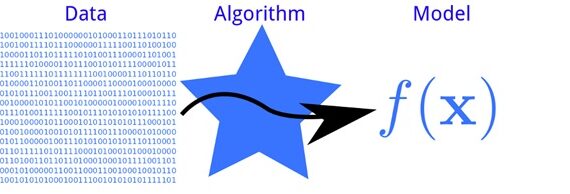
Machine Learning (ML) powers modern AI — from recommendation systems to self-driving cars. But interviews often test your ability to explain models simply and clearly.
Here’s a simplified breakdown of essential ML models — with crisp definitions and examples you can use in interviews.
🔹 Regression Models
- Linear Regression → Finds the best-fit line for predicting continuous values. (House price prediction)
- Polynomial Regression → Captures nonlinear relationships using polynomial terms. (Growth curve analysis)
- Lasso Regression (L1) → Shrinks coefficients, removes irrelevant features. (Gene selection in biology)
- Ridge Regression (L2) → Reduces multicollinearity by shrinking coefficients. (Sales prediction with correlated ads)
- Elastic Net → Hybrid of L1 & L2 for balanced regularization. (Stock returns prediction)
- Logistic Regression → Estimates probability of binary outcomes. (Spam vs non-spam emails)
🌳 Tree-Based & Ensemble Models
- Decision Tree → Rule-based flow for classification/regression. (Loan approval decisions)
- Random Forest → Combines multiple decision trees for robust predictions. (Customer churn prediction)
- Extra Trees → Similar to Random Forest but more random splits for speed.
- AdaBoost → Boosts weak learners (decision stumps) with weighted votes.
- Gradient Boosting (XGBoost/LightGBM) → Sequentially improves weak learners using residuals.
📏 Distance & Probability-Based Models
- k-Nearest Neighbors (kNN) → Classifies based on closest neighbors. (Movie recommendations)
- Support Vector Machines (SVM) → Finds best separating hyperplane. (Digit recognition)
- Naive Bayes → Probabilistic classifier assuming feature independence. (Sentiment analysis)
🌀 Clustering & Association
- k-Means Clustering → Groups unlabeled data into k (Customer segmentation)
- Hierarchical Clustering → Builds tree-like nested clusters. (Document grouping)
- DBSCAN → Density-based clustering, detects outliers. (Fraud detection)
- Apriori Algorithm → Finds association rules between items. (Market basket analysis)
🔻 Dimensionality Reduction
- PCA (Principal Component Analysis) → Projects data into fewer dimensions while retaining variance. (Image compression)
- t-SNE / UMAP → Nonlinear methods for visualization. (Genomics data plotting)
🤖 Neural & Deep Learning Models
- Artificial Neural Networks (ANNs) → Layers of neurons for learning patterns. (Predictive analytics, NLP)
- Convolutional Neural Networks (CNNs) → Specialized for images, detects spatial features. (Facial recognition, medical imaging)
🎮 Reinforcement & NLP Models
- Q-Learning → Learns best actions via trial-and-error with rewards. (Game AI, robotics)
- TF-IDF → Scores important words by balancing frequency vs rarity. (Search ranking)
- Latent Dirichlet Allocation (LDA) → Topic modeling for large text corpora. (Research paper categorization)
- Word2Vec → Embeds words into vector space capturing meaning. (Chatbots, translation)
✅

How to Explain Core Machine Learning Models
